Forex trading can be thrilling, but without a solid trading plan, even experienced traders can lose money fast. Think of a trading plan as your roadmap—it guides your decisions, keeps emotions in check, and improves your chances of consistent success.
In this article, we’ll break down how to develop a Forex trading plan that is practical, actionable, and easy to follow—even for beginners.
Why You Need a Forex Trading Plan
Many new traders jump into the Forex market without a clear strategy. The result? Impulsive decisions, emotional trading, and often, losses. A trading plan helps you:
- Stay Disciplined: Avoid rash decisions driven by fear or greed.
- Set Clear Goals: Know exactly what you want to achieve from trading.
- Manage Risk: Protect your capital with proper stop-loss and position sizing.
- Track Progress: Learn from your trades and improve over time.
Simply put, a trading plan turns Forex trading from gambling into a structured investment approach.
Step 1: Define Your Trading Goals
Start with the big picture. Ask yourself:
- What do I want to achieve financially?
- How much time can I dedicate to trading?
- What level of risk am I comfortable with?
For example:
“I aim to earn 5% monthly returns, trading 1 hour per day, with a maximum risk of 2% per trade.”
Clear goals help you stay focused and measure progress realistically.
Step 2: Choose Your Trading Style
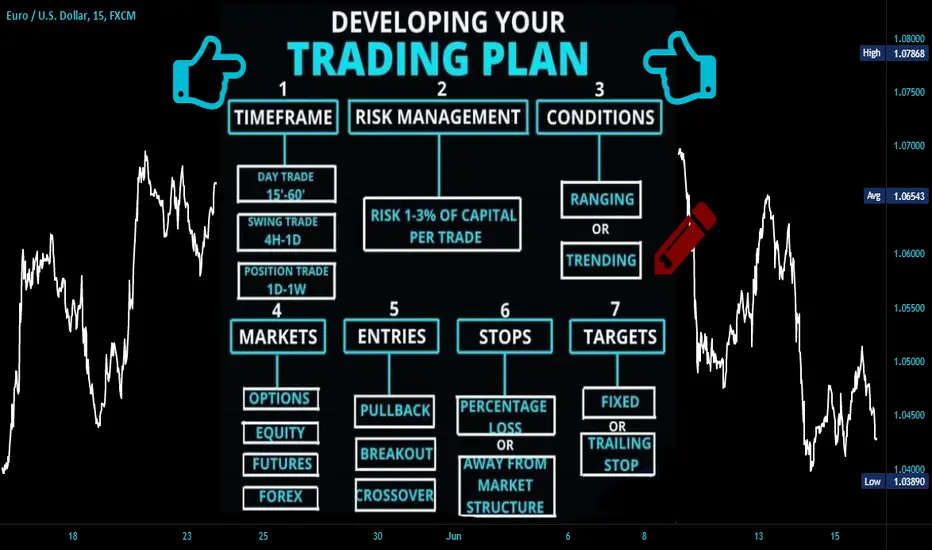
Your trading style determines how often you trade and how long you hold positions. Common styles include:
- Scalping: Quick trades, minutes to an hour.
- Day Trading: Trades opened and closed within a single day.
- Swing Trading: Positions held for days or weeks to capture trends.
- Position Trading: Long-term trades based on fundamental analysis.
Pick a style that fits your schedule, personality, and risk tolerance.
Step 3: Develop Your Strategy
A trading strategy is your formula for entering and exiting trades. Include:
- Market Analysis: Will you use technical, fundamental, or combined analysis?
- Entry Rules: Conditions that must be met before entering a trade (e.g., RSI < 30 and price near support).
- Exit Rules: When to take profit or cut losses.
- Indicators & Tools: Moving averages, MACD, Bollinger Bands, etc.
Consistency is key—your strategy should be repeatable and testable.
Step 4: Risk Management Rules
No strategy is complete without risk management. Protect your account with these rules:
- Set Stop-Loss Orders: Limit losses on each trade (commonly 1-2% of capital).
- Position Sizing: Adjust trade size based on account size and risk tolerance.
- Risk-to-Reward Ratio: Aim for trades that offer at least 2x potential reward compared to risk.
Remember: surviving losses is more important than chasing profits.
Step 5: Plan Your Trading Routine
Consistency comes from routine. Decide:
- Which currency pairs will you trade?
- What time of day will you trade?
- How will you prepare for the trading session?
For example, many traders analyze the EUR/USD and GBP/USD pairs during London and New York sessions for the most liquidity and volatility.
Step 6: Record and Review Your Trades
A trading journal is your best friend. Track:
- Date and time of trades
- Entry and exit prices
- Trade rationale
- Outcome and lessons learned
Review your journal weekly or monthly to identify strengths, weaknesses, and patterns. This turns mistakes into learning opportunities.
Step 7: Stay Disciplined and Flexible
A trading plan is only effective if you stick to it. Avoid:
- Chasing losses
- Entering trades without confirmation
- Letting emotions dictate decisions
At the same time, update your plan as markets evolve. A good plan adapts but doesn’t compromise its core principles.
Bonus Tips for Beginners
- Start Small: Use a demo account to practice without risk.
- Focus on Few Pairs: Master 1-2 currency pairs before expanding.
- Learn Continuously: Forex markets change—stay updated on news and analysis.
- Mind Your Psychology: Patience, discipline, and emotional control are key.
Final Thoughts
A Forex trading plan is your blueprint for success. It transforms trading from guessing into a methodical process, helping you manage risk, stay disciplined, and grow consistently.
Whether you’re a beginner or experienced trader, the secret to long-term profitability isn’t luck—it’s a well-structured trading plan combined with practice, patience, and discipline.