In Forex trading, knowledge is power. One of the most important ways traders gain an edge is by understanding economic indicators—the data points that reveal the health of a country’s economy.
Among these, CPI (Consumer Price Index) and NFP (Non-Farm Payrolls) are two of the most closely watched indicators, but there are several others that can move currencies and markets dramatically.
This guide breaks down these key indicators, why they matter, and how Forex traders can use them to make better decisions.
1. Consumer Price Index (CPI)
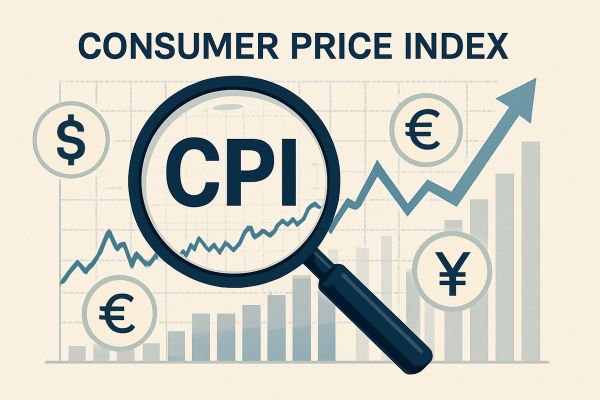
The Consumer Price Index measures the average change in prices paid by consumers for goods and services over a period. It is the most common gauge of inflation.
Why CPI Matters in Forex
- Inflation affects central bank decisions on interest rates.
- Rising inflation may prompt rate hikes, strengthening the currency.
- Falling inflation may lead to rate cuts, weakening the currency.
Example:
- If US CPI rises more than expected, the USD could strengthen because traders anticipate Federal Reserve action to combat inflation.
2. Non-Farm Payrolls (NFP)
The NFP report measures the number of jobs added or lost in the U.S. economy, excluding farm workers, government employees, and some small businesses. It is released monthly by the Bureau of Labor Statistics.
Why NFP Matters in Forex
- Employment levels reflect economic strength.
- Strong job growth often signals higher interest rates, boosting the USD.
- Weak job growth may lead to lower rates, putting pressure on the USD.
Example:
- A higher-than-expected NFP number can push USD/JPY or EUR/USD sharply in favor of the USD.
3. Other Key Economic Indicators
While CPI and NFP are crucial, other indicators also play a big role in Forex markets:
a) GDP (Gross Domestic Product)
- Measures the total value of goods and services produced.
- Strong GDP growth often strengthens a currency; weak growth can weaken it.
b) Unemployment Rate
- Indicates the percentage of people actively seeking work.
- High unemployment can weaken a currency; low unemployment can strengthen it.
c) Retail Sales
- Measures consumer spending, a major driver of economic growth.
- Strong retail sales can indicate economic health and impact currency strength.
d) Trade Balance
- Shows the difference between exports and imports.
- A trade surplus (more exports) can strengthen a currency; a deficit (more imports) can weaken it.
e) PMI (Purchasing Managers’ Index)
- Tracks manufacturing and service sector activity.
- PMI above 50 indicates expansion; below 50 indicates contraction.
- High PMI can boost a currency, signaling a healthy economy.
How Forex Traders Use Economic Indicators
- Anticipate Market Moves
Traders monitor economic calendars to anticipate how releases will affect currencies. - Combine with Technical Analysis
Indicators can be paired with charts, trendlines, and support/resistance levels for better trading decisions. - React Quickly, But Wisely
High-impact releases like NFP can cause sharp volatility. Traders often use smaller positions or wider stop losses to manage risk. - Understand the Context
One number alone doesn’t tell the full story. Traders consider previous releases, market expectations, and central bank reactions.
Tips for Trading Around Economic Data
- Always check the release time—markets can move in seconds.
- Follow the consensus forecast to see how the actual number compares.
- Watch for unexpected surprises, as these cause the biggest price swings.
- Use risk management strategies to avoid being caught off guard by volatility.
Key Takeaways
- Economic indicators are vital tools for Forex traders.
- CPI shows inflation; NFP shows employment strength.
- Other indicators like GDP, unemployment, retail sales, trade balance, and PMI also influence currencies.
- Combining economic analysis with technical strategies can improve trading outcomes.
Final Thoughts
Understanding CPI, NFP, and other economic indicators gives Forex traders a real edge in predicting market moves. While charts and technical tools are essential, economic data provides the story behind the numbers—the reason why currencies rise or fall.
By staying informed and analyzing data carefully, traders can anticipate trends, manage risks, and make smarter trades.