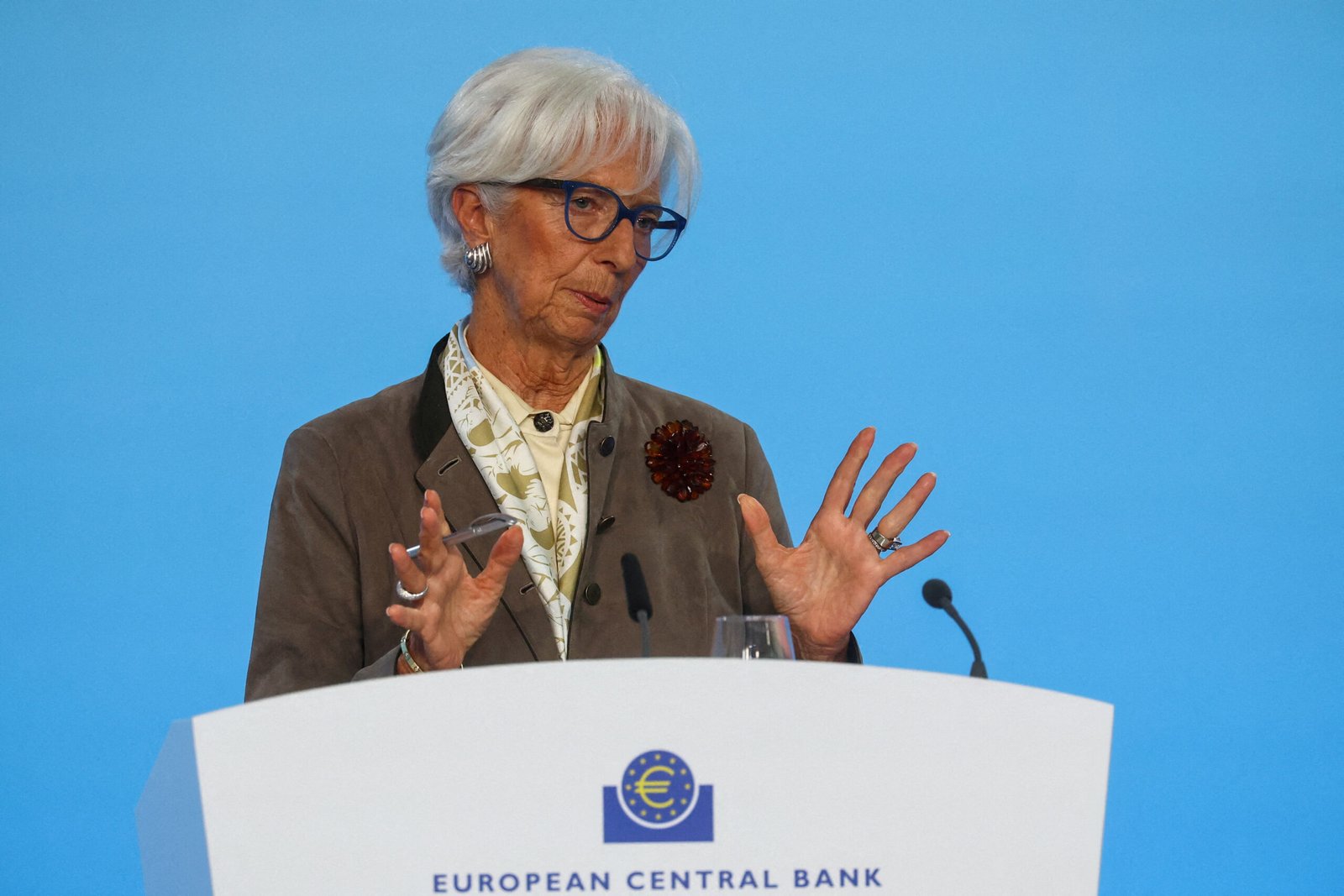
According to a recent Reuters poll, the European Central Bank (ECB) is widely expected to maintain its Deposit Facility Rate at 2% in its upcoming monetary policy announcement scheduled for October 30.
Economists’ Consensus
All 88 economists surveyed anticipate that the ECB will leave interest rates unchanged. Furthermore, among 79 economists, 45 predict that the ECB will hold the deposit rate steady at 2.00% throughout 2026.
Eurozone Economic Outlook
The Eurozone economy is projected to grow steadily, with GDP growth estimates of 1.2% in 2025, 1.1% in 2026, and 1.4% in 2027.
Market Reaction
Following these expectations, the EUR/USD currency pair traded 0.12% lower, hovering near 1.1585 at the time of reporting. This marks the fourth consecutive day of losses for the euro against the US dollar.
Understanding the ECB and Its Influence on the Euro
The European Central Bank, based in Frankfurt, Germany, serves as the central bank for the Eurozone. Its primary role is to maintain price stability by keeping inflation around 2%. To achieve this, the ECB adjusts interest rates, which directly affect the strength of the euro — higher interest rates typically boost the euro’s value, while lower rates tend to weaken it.
The ECB’s monetary policy decisions are made by the Governing Council, which meets eight times a year. This council includes the heads of national central banks from Eurozone countries and six permanent members, including ECB President Christine Lagarde.
What Are Quantitative Easing (QE) and Quantitative Tightening (QT)?
Quantitative Easing (QE) is a policy tool used by the ECB in extraordinary circumstances. It involves printing euros to purchase government or corporate bonds from banks and financial institutions, injecting liquidity into the economy. This usually leads to a weaker euro. The ECB deployed QE during the 2009-2011 financial crisis, in 2015 when inflation was low, and during the COVID-19 pandemic.
Quantitative Tightening (QT) is the opposite of QE. It occurs when the economy recovers and inflation rises. Instead of buying more bonds, the ECB stops reinvesting the principal from maturing bonds, effectively reducing liquidity. QT generally supports a stronger (bullish) euro.
Stay tuned for the ECB’s official announcement on October 30, which will clarify the future path of Eurozone monetary policy and its impact on the euro.