Today we focus on two key U.S. data points: Canada’s inflation figures and the Federal Reserve Bank of Philadelphia non‑manufacturing index, both expected to be weak (manufacturing data last week already plunged deep into contraction).
In the absence of strong U.S. economic data, analysts are looking for clues elsewhere. A recent report from Bloomberg quotes a senior analyst at Goldman Sachs saying what many have suspected for months: “Everything is weird.” He points out that historical correlations between bonds, stocks, and gold have broken down, noting the oddity of a week where “risk‑off” turns into “everything higher.”
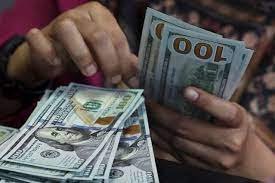
Reuters columnist Peter McGeever goes further: he highlights that the recent surge in gold, cryptocurrencies and equities has triggered talk of the so‑called “debasement trade” — the idea that looming tariff‑driven inflation will drive the U.S. dollar down. But he argues that markets don’t seem to back that narrative. Yields aren’t spiking, and the dollar isn’t tumbling as one would expect in a pure debasement scenario.
What really seems to be unfolding is a deeper loss of faith. Analysts suggest that a crisis of confidence in the dollar could be imminent if any of the following happen:
- U.S. inflation comes in unexpectedly strong, and markets view a rate cut as inappropriate or forced.
- The Fed appears politically pressured or loses its independent footing, undermining its credibility.
- U.S. fiscal deficits and debt projections worsen, and markets begin to question the safety of dollar‑denominated assets.
Despite these risks, the dollar remains firm. That suggests that either markets are simply ignoring the warning signs—or the breakdown of correlations is masking something deeper. When the dam eventually does break, many expect a sharp dollar downward move. The frustrating truth: most analysts have been calling for it for months and have been wrong so far.
Inflation to Watch: On Friday the U.S. is releasing the delayed September CPI. Forecasts suggest about +0.4 % month‑on‑month for headline (annual ~3.1%) and +0.3 % for core (annual ~3.1%). A year ago, headline inflation was 2.4% and core was 3.3%. If core alone is considered, things appear to be improving—but excluding food and energy may hide what consumers actually feel at the grocery store.
If the inflation number is “acceptable,” the dollar could stay firm despite upcoming Fed rate cuts. If it turns out worse, markets might interpret it as the Fed being coerced or mis‑timed—leading to a loss of confidence, which would be negative for the dollar.
Fun fact: Betting that President Donald Trump would back‑out (the so‑called “TACO” trade: Trump Always Chickens Out) yielded strong returns. A Bloomberg study of Polymarket data showed that hedging against Trump taking action performed similarly to the S&P 500, while wagering he would act was not a winning move.
Weird sidebar: A $20 billion U.S. Treasury‑Argentina peso/dollar swap was signed just before a key local election in Buenos Aires—an unusual move, akin to bail‑out conditions last seen in the 1980s for Mexico. Details are opaque, and the implications for U.S. banks and Argentina’s chronic default history are still emerging.