In the world of Forex trading, “the trend is your friend” isn’t just a catchy saying—it’s a powerful principle. Trend following is a strategy that lets traders ride the market waves instead of fighting them, making it one of the most reliable methods for capturing profits.
Whether you’re a beginner or an experienced trader, understanding trend following can help you make smarter trading decisions and reduce the stress of trying to predict market reversals.
What is Trend Following in Forex?
Trend following is a trading strategy based on the idea that prices tend to move in sustained directions over time. Instead of trying to guess tops or bottoms, trend followers look for assets moving consistently upward (uptrend) or downward (downtrend) and trade in the direction of the trend.
- Uptrend: Higher highs and higher lows
- Downtrend: Lower highs and lower lows
The goal is simple: buy when the price is rising and sell when it’s falling, staying in the trade until the trend shows signs of reversing.
Why Trend Following Works
Forex markets often move in cycles—uptrends, downtrends, and consolidations. Trend followers capitalize on persistent price movements, using indicators and price action to confirm trends.
Benefits include:
- Simplicity: You don’t need to predict exact tops and bottoms.
- Reduced Stress: Following the trend avoids fighting market momentum.
- Profit Potential: Trends can last for days, weeks, or even months, allowing big gains.
Caution: Trend following works best in trending markets and may produce false signals during sideways or choppy markets.
Popular Trend Following Strategies in Forex
Here are some of the most effective trend following strategies:
1. Moving Average Strategy
Moving averages (MA) smooth out price data to show the overall direction.
How to use it:
- Simple Moving Average (SMA): Calculate the average price over a set period.
- Exponential Moving Average (EMA): Gives more weight to recent prices, making it more responsive.
Trading signals:
- Price above the MA → Bullish trend → Consider buying
- Price below the MA → Bearish trend → Consider selling
- Crossover strategy: When a short-term MA crosses above a long-term MA → Buy signal; crosses below → Sell signal
Example: Using a 50-day EMA and a 200-day EMA, a crossover can indicate a strong trend change.
2. Breakout Strategy
Breakout strategies focus on entering trades when price breaks key support or resistance levels, signaling the start of a strong trend.
How to use it:
- Identify consolidation zones (price moves sideways).
- Wait for the price to break above resistance (buy) or break below support (sell).
- Confirm the breakout with high volume or trend indicators like MACD or RSI.
Pro Tip: False breakouts are common—use stop-loss orders to protect yourself.
3. Trendline Strategy
Trendlines are simple yet powerful tools for identifying the direction of the trend.
How to use it:
- Draw a line connecting higher lows in an uptrend or lower highs in a downtrend.
- Enter trades when price bounces off the trendline in the direction of the trend.
- A break of the trendline may signal a trend reversal.
4. Indicator-Based Strategy
Several technical indicators help traders confirm trends:
- MACD: Confirms momentum and trend direction
- ADX (Average Directional Index): Measures trend strength
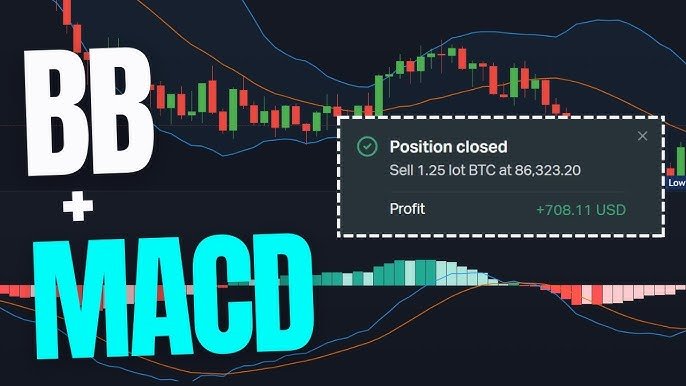
- Bollinger Bands: Identifies trend volatility and breakout opportunities
Combining indicators with price action improves accuracy and reduces false signals.
Risk Management in Trend Following
Trend following can be highly profitable, but risk management is crucial:
- Use Stop-Loss Orders: Protect yourself if the trend suddenly reverses.
- Position Sizing: Never risk more than a small percentage of your account on one trade.
- Avoid Overtrading: Only enter trades when the trend is clear.
- Monitor Market News: Events like central bank decisions can abruptly shift trends.
Tips for Successful Trend Following
- Patience is Key: Wait for clear trends to form.
- Stay Disciplined: Don’t exit too early—trends can last longer than you expect.
- Combine Tools: Use trend indicators alongside price action for confirmation.
- Adapt to Market Conditions: Trend following works best in trending markets, not sideways ones.
Final Thoughts
Trend following is about going with the flow instead of fighting it. By identifying trends early, using the right indicators, and managing risk wisely, traders can capitalize on sustained price movements and reduce the stress of trading.
Remember: No strategy is perfect. The market can be unpredictable, but trend following gives you a structured, disciplined approach to trading Forex successfully.